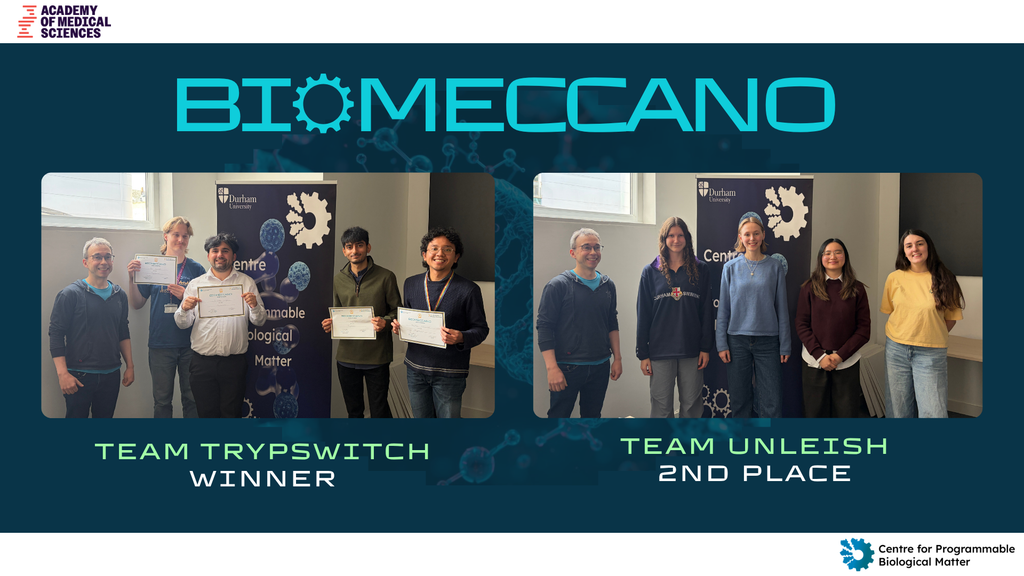

Biomeccano: PhD students take on an AI-powered protein design challenge
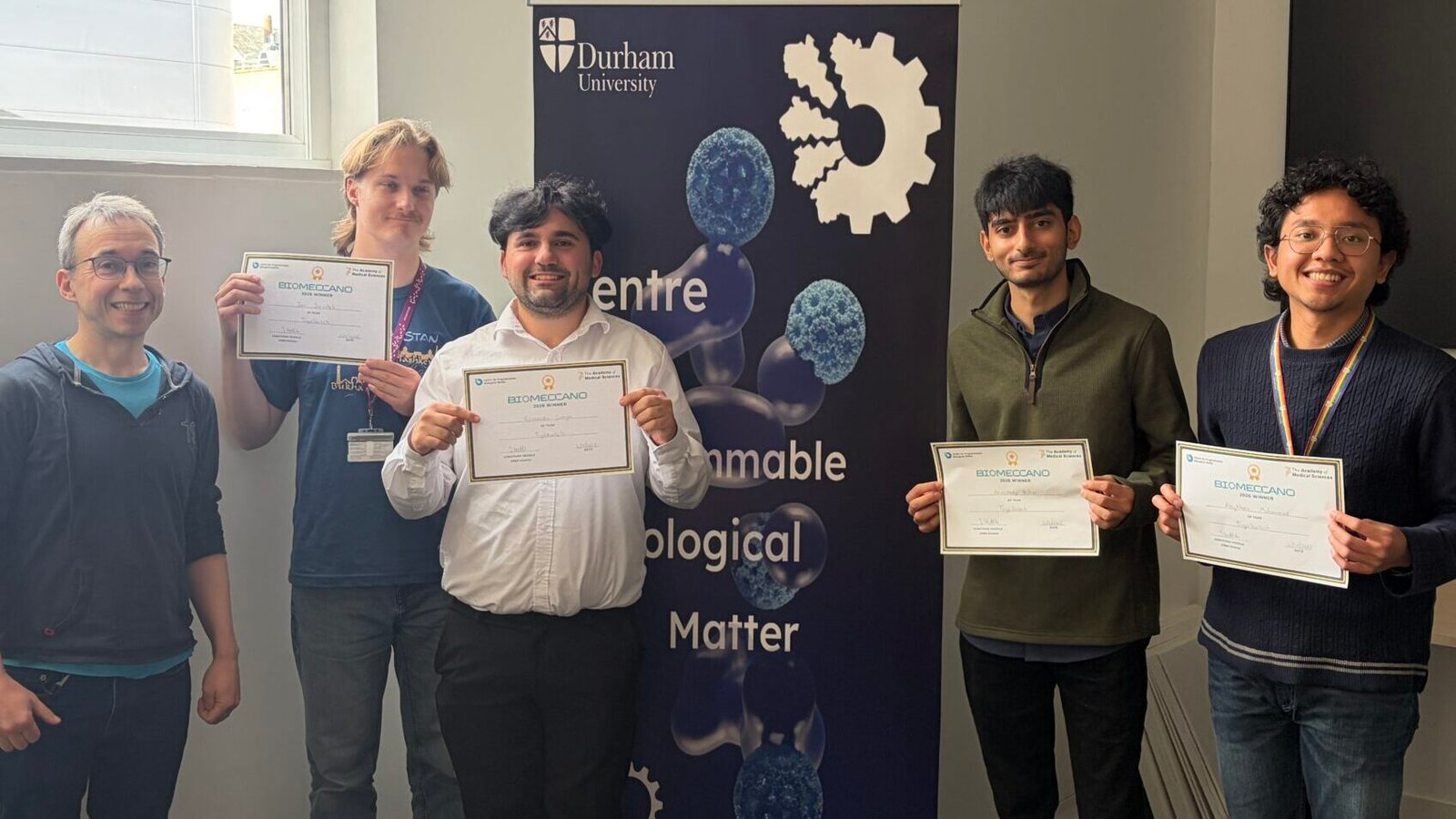
This summer, the Centre for Programmable Biological Matter launched Biomeccano, its first protein design competition, bringing together PhD students from across Durham University’s Department of Biosciences to tackle a real-world biological challenge.
Nineteen PhD students from ten research groups formed four teams, with participants challenged to design an artificial protein binder targeting trypanothione reductase, a protein associated with Leishmania.
The competition was designed to give participants experience of the full journey from a computational idea to an experimentally testable protein. Students received training in cutting-edge computational protein design approaches, including BindCraft and ProteinMPNN, alongside mentoring and specialist workshops.
Importantly, Biomeccano was about much more than protein design. Participants also took part in science communication and venture-focused workshops, developing skills in communicating complex research to different audiences and pitching scientific ideas.
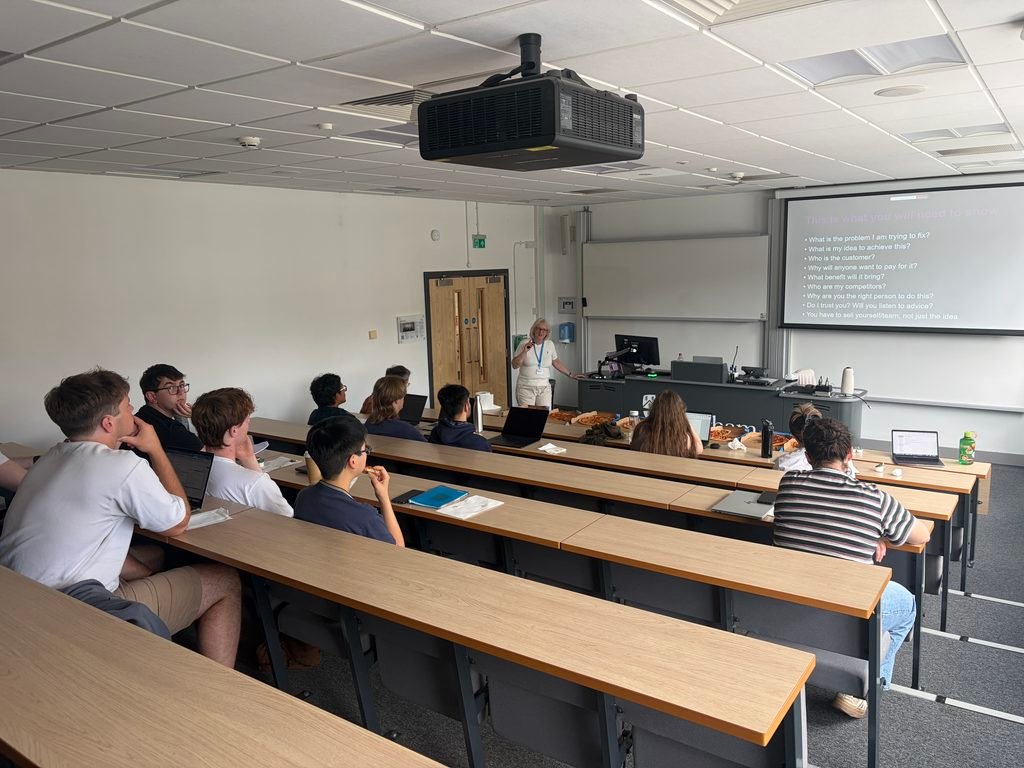
Following the initial design phase, teams presented their ideas through video pitches to a judging panel, with the top two teams, UnLeish and TrypSwitch, progressing to the production stage. Their selected protein binders were then produced in the laboratory and experimentally tested before teams presented their final designs and results.
Following an exciting final pitch and questions from the audience, Team TrypSwitch were crowned the winners of Biomeccano 2026. The competition concluded with a well-earned celebration, bringing participants, judges and spectators together over some delicious pizza!
Winning team members will receive a one-year membership to the Royal Society of Biology, as well as a 3-D print of their protein binder design.
Beyond the competition itself, Biomeccano was created to help PhD researchers develop independent problem-solving skills, encourage collaboration across the department and provide hands-on experience of computational protein design and experimental translation.
Congratulations to Team TrypSwitch and to everyone who took part in the inaugural Biomeccano Protein Design Competition. We would also like to thank all of the workshop leaders, judges, technical and support teams who contributed their time and expertise throughout the programme.
We are especially grateful to the Academy of Medical Sciences for supporting the competition and helping us provide this training and development opportunity for our PhD researchers.