

Durham Scientists Define the Toolkit for Building the Next Generation of Biological Nanomachines
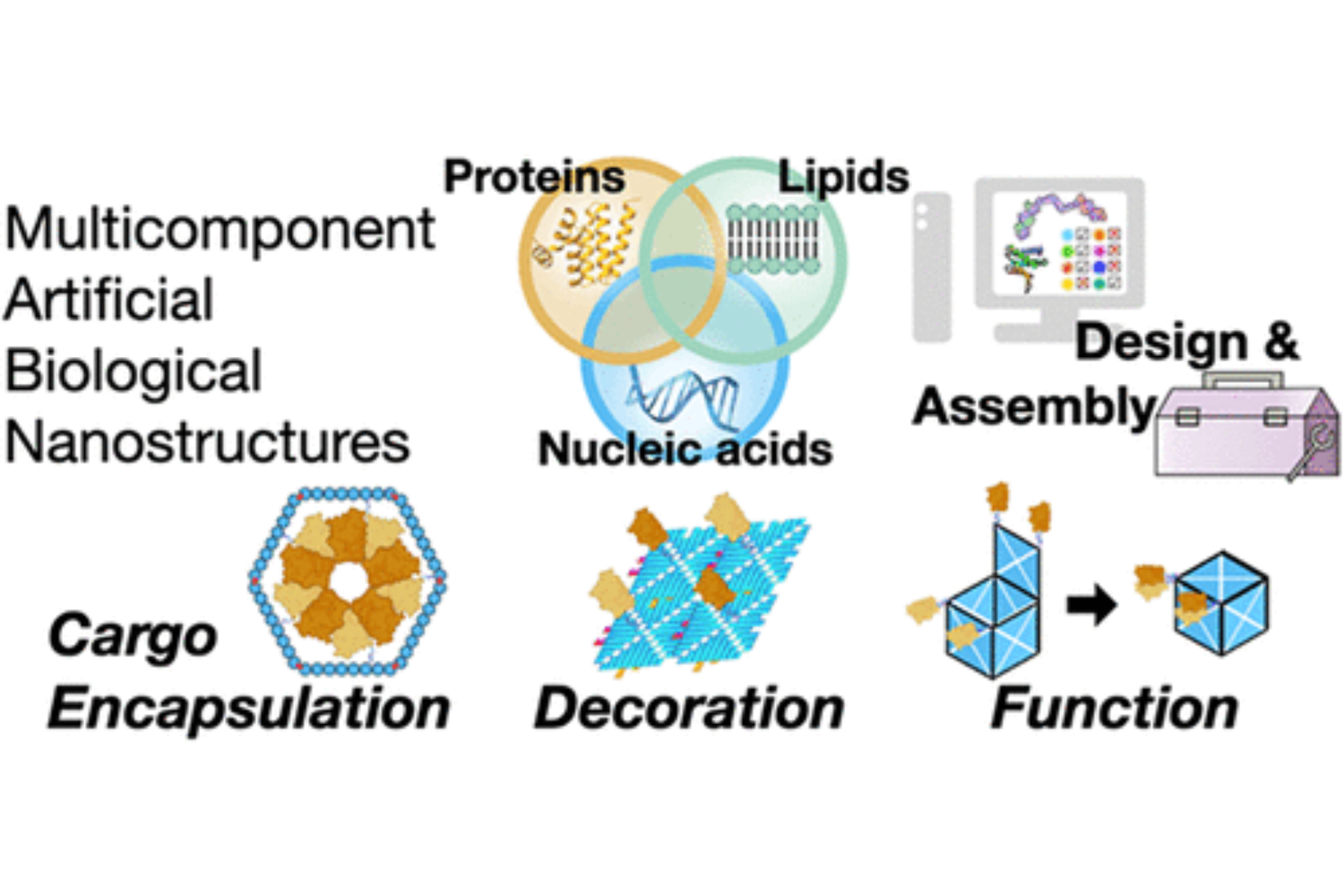
A new review article published in ACS Nano by a research team at the Durham’s Centre for Programmable Biological matter (CPBM) maps the rapidly advancing toolkit that could help scientists design and build artificial biological nanostructures — tiny systems made from the same kinds of molecules that constitute life itself.
The review, “Tools For Building Artificial Biological Nanostructures,” brings together recent progress in DNA and RNA nanotechnology, protein design, chemical modification, bioconjugation and machine-learning. Together, these approaches are bringing researchers closer to the long-term goal of constructing programmable nanoscale devices from biological materials such as proteins, nucleic acids and lipids.
Biological nanomachines already exist throughout nature. Viruses, enzymes, cellular compartments and molecular motors can assemble themselves, catalyse reactions, transport materials and respond to their environment. The challenge for engineering biology is to move beyond observing these natural systems and begin designing new ones with predictable shapes, functions and useful features.
“Biology has already solved many of the problems that engineers face at the nanoscale,” said Jonathan Heddle, one of the corresponding authors of the review. “The question is how we can both learn from those systems and develop new, reliable tools to build novel biological structures that do useful things. At the CPBM we are working to achieve these goals and produce novel biological nanosystems that will benefit society.”
A central theme of the review is that the most sophisticated future nanomachines are likely to combine multiple biological materials. DNA or RNA may provide programmable scaffolds; proteins may deliver catalytic, binding or mechanical functions; lipids may create membrane-like compartments; and chemical or enzymatic linking strategies may bring these parts together into integrated systems. The work describes the tools that researchers can use to manipulate and program these molecules and the benefits and drawbacks associated with them.
Mastery of these techniques offer the prospect of building new nanosystems with potential long-term applications include drug delivery, biosensing, and molecular manufacturing
While nanoscale robots of science fiction remain distant, the work points out that our growing ability to design programmable structures from life’s own molecular building blocks is opening a realistic path toward functional biological nanotechnology.
Paper details
Title: Tools For Building Artificial Biological Nanostructures
Journal: ACS Nano
DOI: https://doi.org/10.1021/acsnano.5c14315
Authors: Thomas S. Bradford, Sarah Hutchings, Jonathon D. Liston, Zuzanna Pakosz-Stepien, Artemis Sanderson, Ahmed Shaukat, Adam Bentham, Ting-Yu Lin, Piotr Stepien and Jonathan G. Heddle